Skip to content
MARG

Verul · Maharashtra

Rashtrakuta Era Shree Kailash Mandir (Verul)

  • Shiva
  • Maharashtra

Photo: Photo: Shivajidesai29 · CC BY-SA 4.0, via Wikimedia Commons

About Rashtrakuta Era Shree Kailash Mandir (Verul)

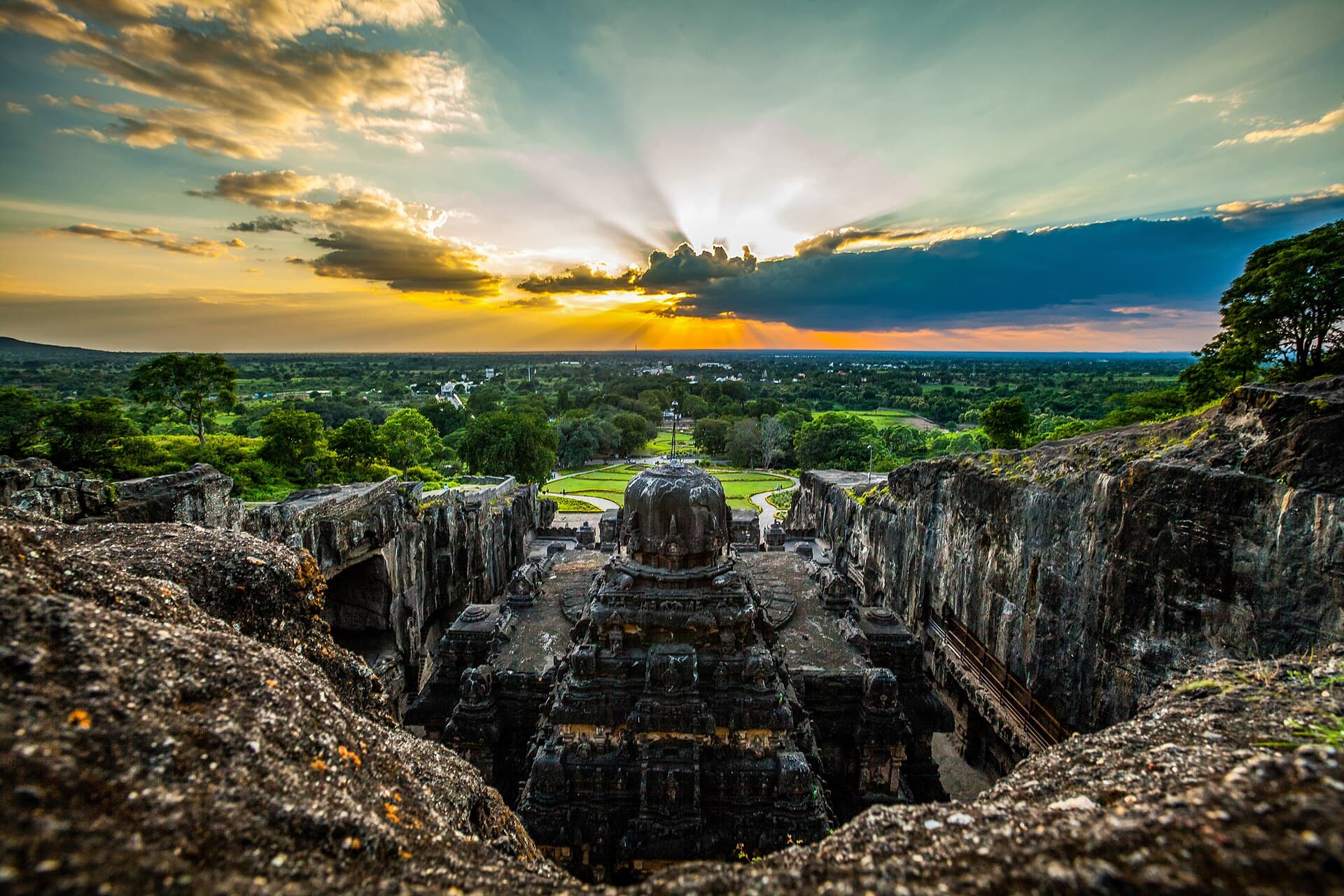
Rashtrakuta Era Shree Kailash Mandir (Verul) is a Hindu temple in Verul, Maharashtra. It is dedicated to Lord Shiva. The world's largest monolithic rock-cut temple. Kailasa (Cave 16) was carved top-down from a single basalt cliff at Ellora in the 8th century as a likeness of Shiva's abode, Mount Kailash. It is part of the Ellora Caves UNESCO World Heritage Site.

Location

Verul, Maharashtra20.0237° N, 75.1791° E

Directions open in Google Maps or OpenStreetMap from the temple's coordinates. MARG does not provide live navigation.

History

Kailasa was excavated under the Rashtrakuta king Krishna I (r. c. 756–773 CE). The Baroda copper-plate inscription of 812 CE describes a wondrous temple built by him on the hill at Elapura (Ellora). Later Rashtrakuta rulers added to it. It is the centrepiece of Ellora's 34 caves, where Buddhist, Hindu and Jain monuments stand side by side. The Ellora Caves were inscribed as a UNESCO World Heritage Site in 1983 and are protected by the Archaeological Survey of India.

Mythology

The temple is conceived as Mount Kailash, the Himalayan home of Shiva and Parvati. One of its best-known panels shows Ravana trying to uproot Kailash while Shiva calmly pins the mountain down with his toe. A local legend says a queen vowed to fast until she saw the temple's top. To fulfil her vow quickly, the builders carved it from the top downwards.

Architecture

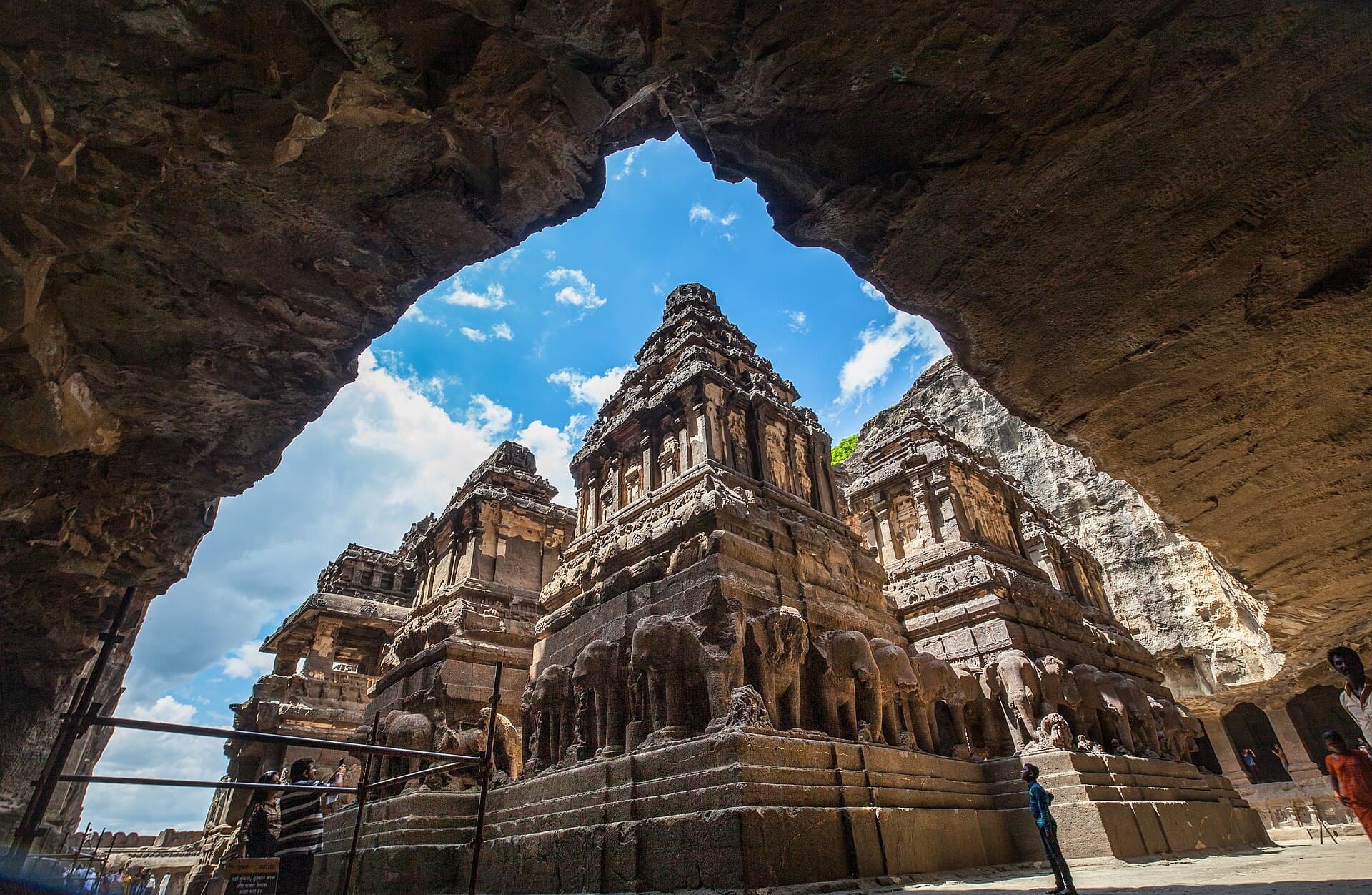
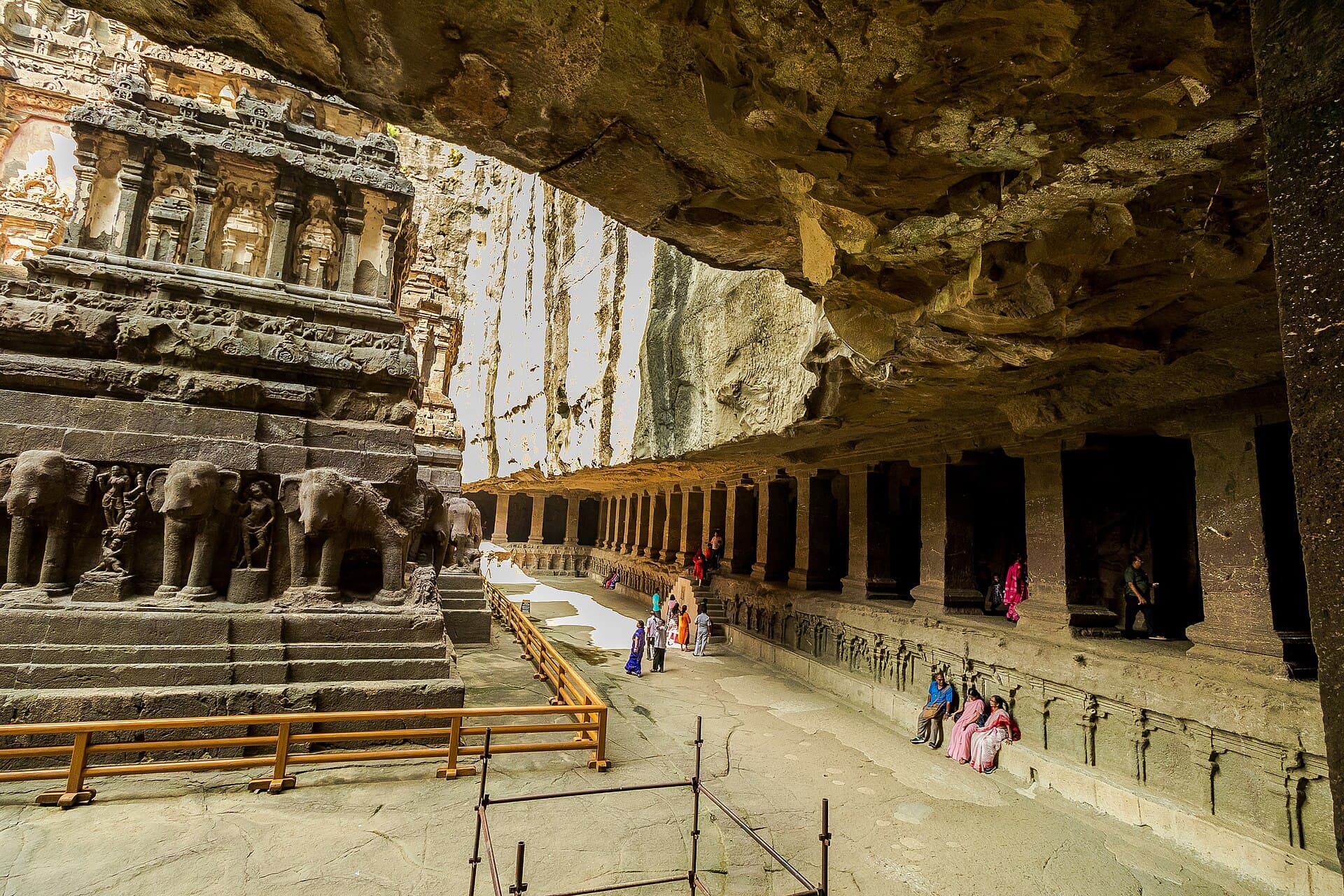
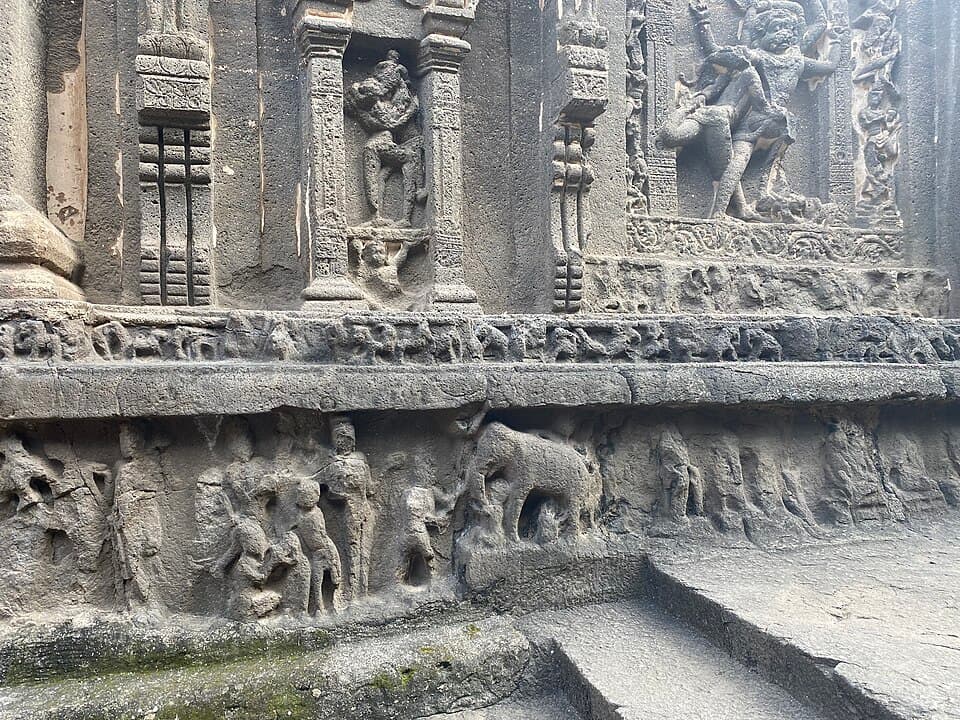
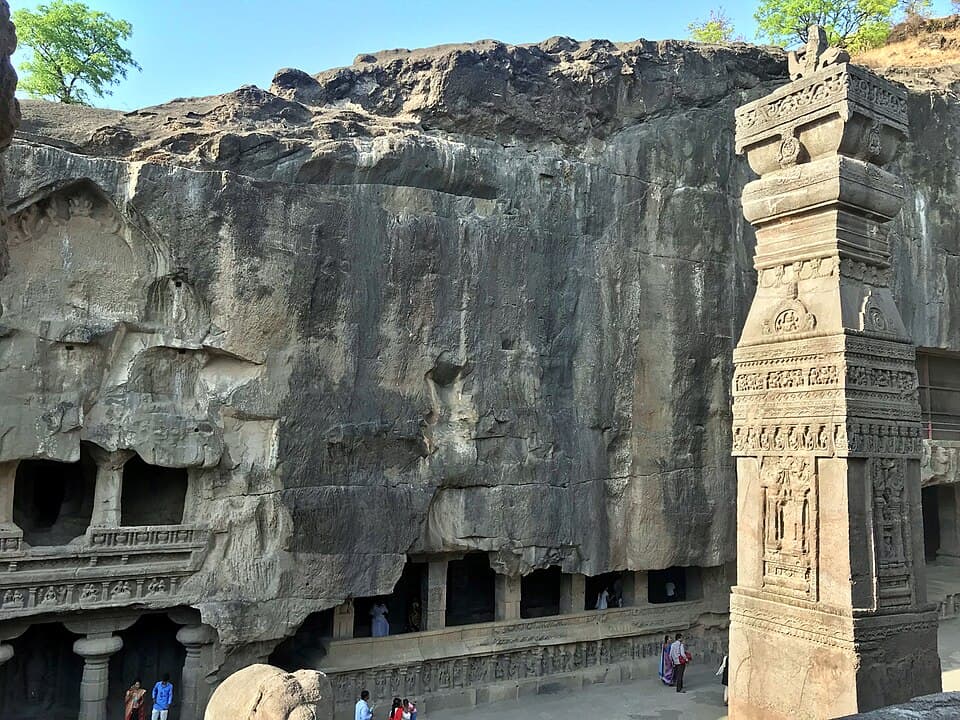
Built in Dravidian style, Kailasa was not constructed but carved by cutting three deep trenches into the hillside and sculpting the rock left in the middle. An estimated 200,000 tonnes of rock were removed. The pit is about 84 m × 47 m, and the shikhara rises about 30 m. Highlights:

  • a two-storey gateway
  • A Nandi mandapa joined the main shrine by a rock bridge.
  • two free-standing dhvajastambhas about 17 m tall
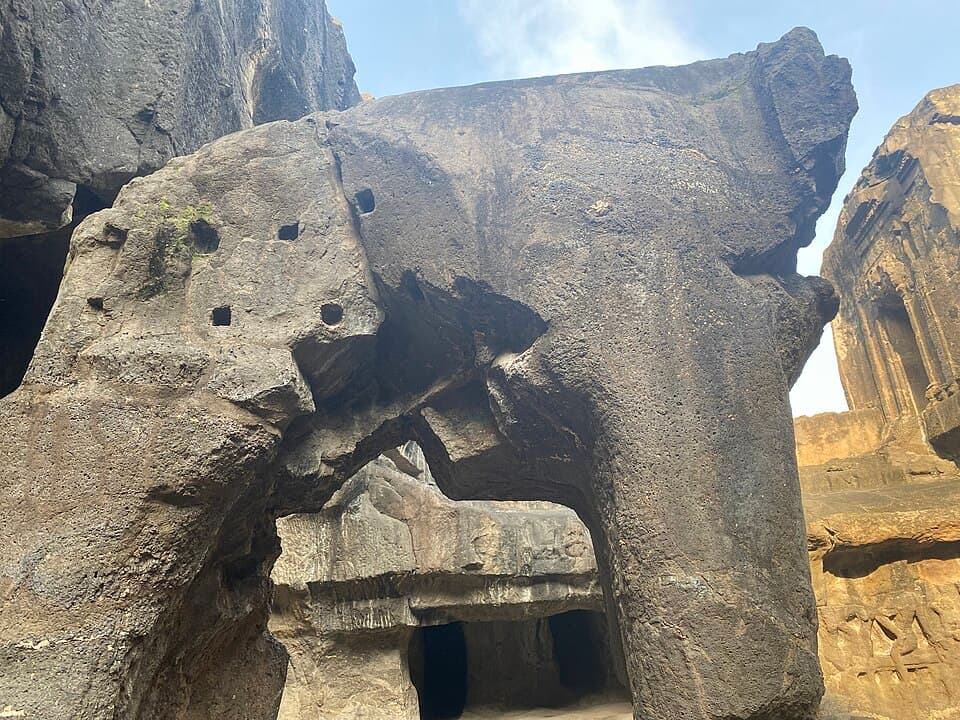
  • a plinth carried by life-size elephants
  • Ramayana and Mahabharata friezes
  • the Ganga–Yamuna–Saraswati shrine
  • the Lankeshvara cave on the north side

Visiting information

Timings

Mon, Wed, Thu, Fri, Sat, Sun07:00–18:00

Timings, rules and access can change, especially on festival days and in season. Please confirm locally before you travel.

Dress code

No formal dress code. Modest clothing and comfortable walking shoes are recommended. Remove footwear at the inner shrine if asked.

Visitor guidelines

ASI-protected monument with no regular daily puja. Entry ticket (verify current ASI rates): about ₹40 for Indian/SAARC/BIMSTEC visitors (cheaper online), about ₹600 for foreign nationals, and children under 15 are free. Do not touch or climb the carvings. No drones without permission. Closed Tuesdays.

How to reach

About 30 km northwest of Chhatrapati Sambhajinagar (Aurangabad) on the Ellora road, roughly 45–60 min by taxi or MSRTC bus from the Central Bus Stand. Nearest airport: Chhatrapati Sambhajinagar (IXU), about 40 km. Nearest railhead: Chhatrapati Sambhajinagar station, about 30 km. Daulatabad Fort is on the way.

Parking

Paid parking at the Ellora visitor complex and main entrance. Cave 16 is a short walk from the entrance, and battery buses run along the cave line.

Accommodation

A few hotels and guesthouses in Verul village. Most visitors stay in Chhatrapati Sambhajinagar.

Prasad

No prasad, since this is a monument and not an active shrine. For darshan and prasad, visit Grishneshwar Jyotirlinga, about 1 km away.

Facilities

  • Drinking Water
  • Parking
  • Restrooms
  • Dining Area
  • Wheelchair Access

Nearby Temples

Other temples on MARG close to Rashtrakuta Era Shree Kailash Mandir (Verul).

View all temples

Grishneshwar Temple: Photo: Rashmi.parab · CC BY-SA 3.0 via Wikimedia Commons · Vishwakarma Temple Elodgad verul: Photo: Udaykumar PR · CC BY 3.0 via Wikimedia Commons · Bhadra Maruti: Photo: Balurbala · CC BY-SA 4.0 via Wikimedia Commons · Shulibhanjan Dattatreya Mandir: Illustration · MARG temple art (not a photograph of this temple)