Panch Kedar: The Five Shrines of Shiva in the Himalayas
Kedarnath, Tungnath, Rudranath, Madhyamaheshwar and Kalpeshwar: the legend of the Pandavas, the treks to each shrine, the season and how to plan the Panch Kedar yatra.
Author: MARG TeamPublished: 4 min read
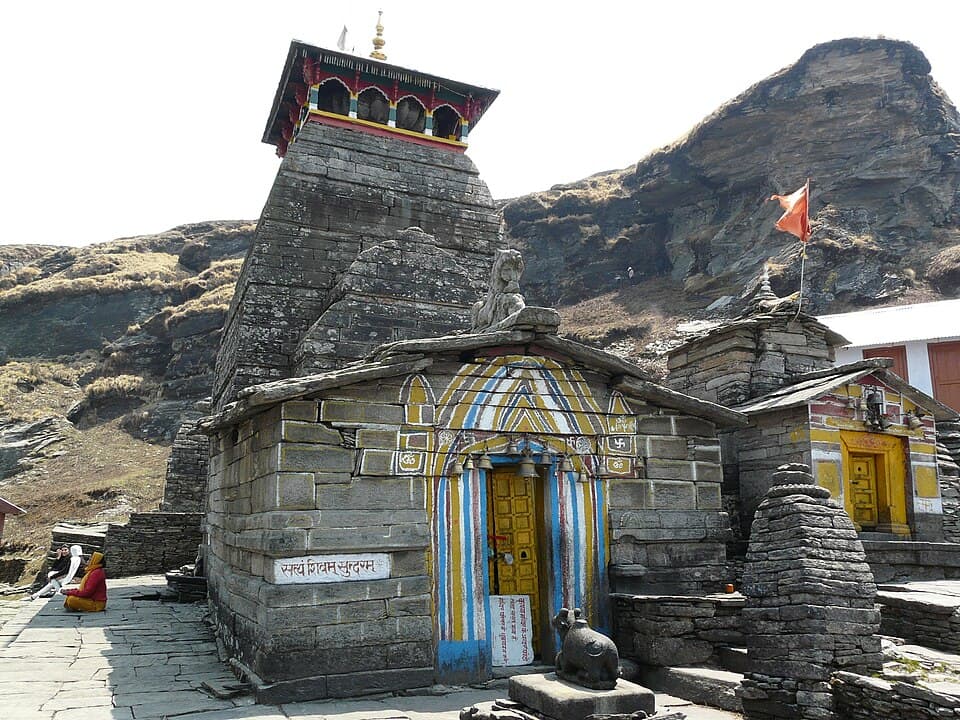
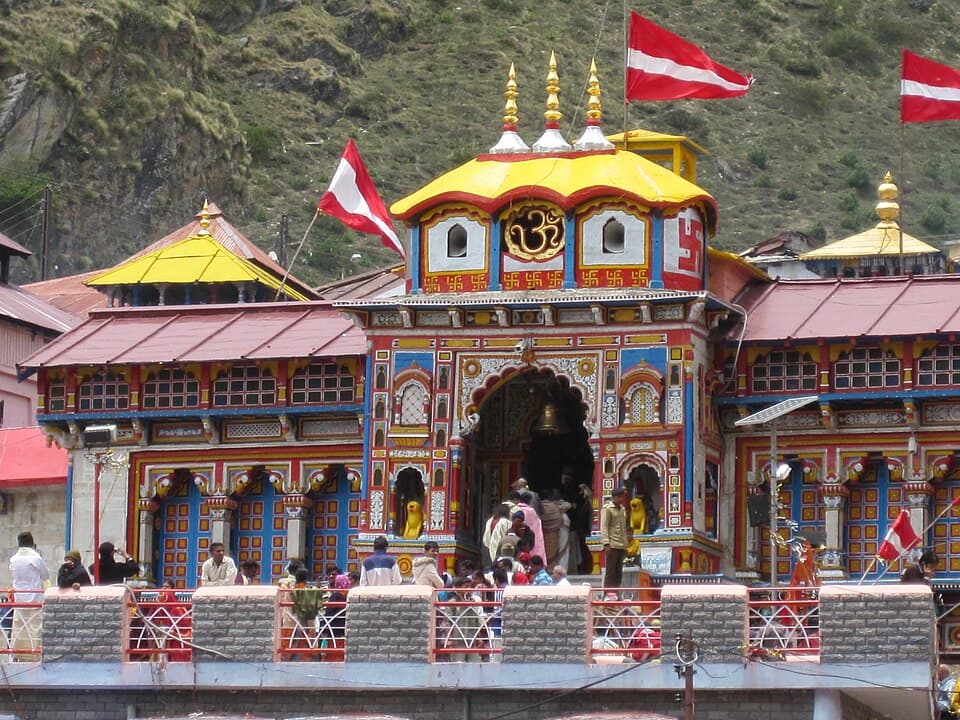
High in the Garhwal Himalayas, five temples of Shiva are linked by one story and a chain of mountain trails. Together they are the Panch Kedar: Kedarnath, Tungnath, Rudranath, Madhyamaheshwar and Kalpeshwar. Walking all five is one of the great pilgrimages of India, and one of its most beautiful treks.
The legend of the Panch Kedar
After the Kurukshetra war, the Pandavas were burdened by the sin of killing their own kin and teachers. On Krishna's advice they went in search of Shiva to ask his forgiveness. Shiva, unwilling to absolve them so easily, hid from them, first at Guptkashi and then in the form of a bull among the herds of the Himalayas.
Bhima recognised the bull, stood astride a valley and caught it as it tried to slip away. The bull dived into the earth, and its body reappeared in five places, each now a shrine:
- Kedarnath: the hump
- Tungnath: the arms
- Rudranath: the face
- Madhyamaheshwar: the navel
- Kalpeshwar: the matted hair
Pleased by their devotion, Shiva forgave the Pandavas, who built the first temples at each place. Tradition says the head appeared at Pashupatinath in Nepal.
The five shrines
1. Kedarnath (3,583 m)
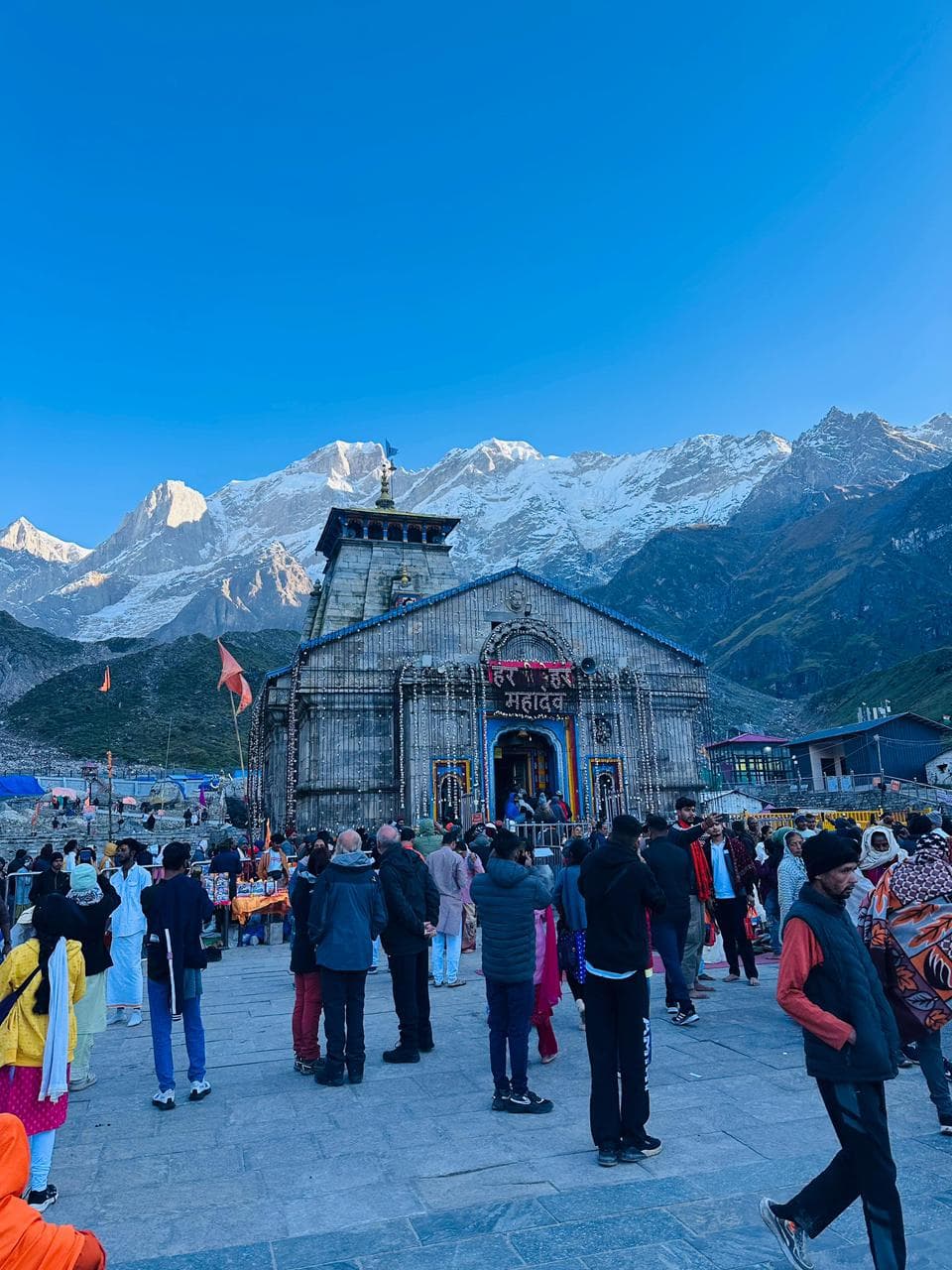
The first and greatest of the five, and one of the twelve Jyotirlingas. The trek is about 16 km from Gaurikund along the Mandakini; ponies, palkis and helicopters are available.
2. Madhyamaheshwar (about 3,490 m)
A small stone temple in a meadow beneath the Chaukhamba peaks, reached by a trek of about 16 km from Ransi through oak and rhododendron forest. A steep climb above it leads to Budha Madhyamaheshwar, with one of the finest Himalayan views anywhere.

3. Tungnath (3,680 m)
The highest Shiva temple in the world, reached by a paved path of about 3.5 km from Chopta, the easiest of the five treks. Another kilometre above it is the Chandrashila summit, with a sweeping view of Nanda Devi, Trishul and Chaukhamba at sunrise.
4. Rudranath (about 3,600 m)
Shiva is worshipped here as Neelkanth, as a natural rock face. Rudranath is the hardest of the five: about 20 km from Sagar village near Gopeshwar, across high alpine meadows.

5. Kalpeshwar (2,200 m)
The only Panch Kedar shrine open all year, in the Urgam valley, a short walk from the road. Shiva's matted hair is worshipped in a small cave temple.
Season, order and winter seats
- Season: May to early November for Kedarnath, Madhyamaheshwar, Tungnath and Rudranath; Kalpeshwar all year. Avoid July and August, when the monsoon causes landslides.
- Traditional order: Kedarnath, Madhyamaheshwar, Tungnath, Rudranath and Kalpeshwar.
- Winter seats: Kedarnath's and Madhyamaheshwar's deities winter at Omkareshwar temple, Ukhimath, Tungnath's at Makkumath, and Rudranath's at the Gopinath temple in Gopeshwar.
- Time: allow 12 to 15 days for all five, with rest days.
Follow the full route on MARG: the Panch Kedar Yatra.
Trek tips
- Acclimatise: sleep at a middle altitude before the high treks, and walk slowly.
- Carry warm layers, rain gear and good shoes even in summer; nights are cold.
- Start early. Clouds and rain usually come in the afternoon.
- Facilities on the Madhyamaheshwar and Rudranath trails are basic; carry snacks, water purification and a torch.
- Register with Uttarakhand Tourism and check the weather before setting out.
Collect all five Kedars
Each Panch Kedar temple, and shrines like Bhairavnath above Kedarnath, has its own Sacred Card on MARG. Check in at each one and your Spiritual Passport becomes the record of the whole yatra.
- Find one nearby. Open MARG and look at Nearby Temples, or browse temples across India.
- Check in when you arrive. Your visit is verified at the temple and added to your Spiritual Passport.
- Collect the Sacred Card. Most temples on MARG have their own card, unlocked on your first verified visit.
Panch Kedar: frequently asked questions
What are the Panch Kedar temples?
Kedarnath, Tungnath, Rudranath, Madhyamaheshwar and Kalpeshwar, five Shiva temples in the Garhwal Himalayas of Uttarakhand.
Which Panch Kedar is the easiest to reach?
Kalpeshwar, a short walk from the road, followed by Tungnath, about 3.5 km from Chopta.
Which Panch Kedar is the hardest trek?
Rudranath, about 20 km from Sagar village across high meadows.
Which is the highest Shiva temple in the world?
Tungnath, at about 3,680 m.
When is the best time for the Panch Kedar yatra?
May–June and September–October. The temples except Kalpeshwar close for winter around Diwali.
The MARG app
Visit a temple near you
Take darshan, then check in with the MARG app: the visit joins your Spiritual Passport and you collect that temple's Sacred Card.