Diwali 2026: The Five Days, Explained
Dhanteras on 6 November, Lakshmi Puja on 8 November, Bhai Dooj on 11 November: what each day means, when the muhurats fall, and where to see Diwali at its brightest.
Author: MARG TeamPublished: 12 min read
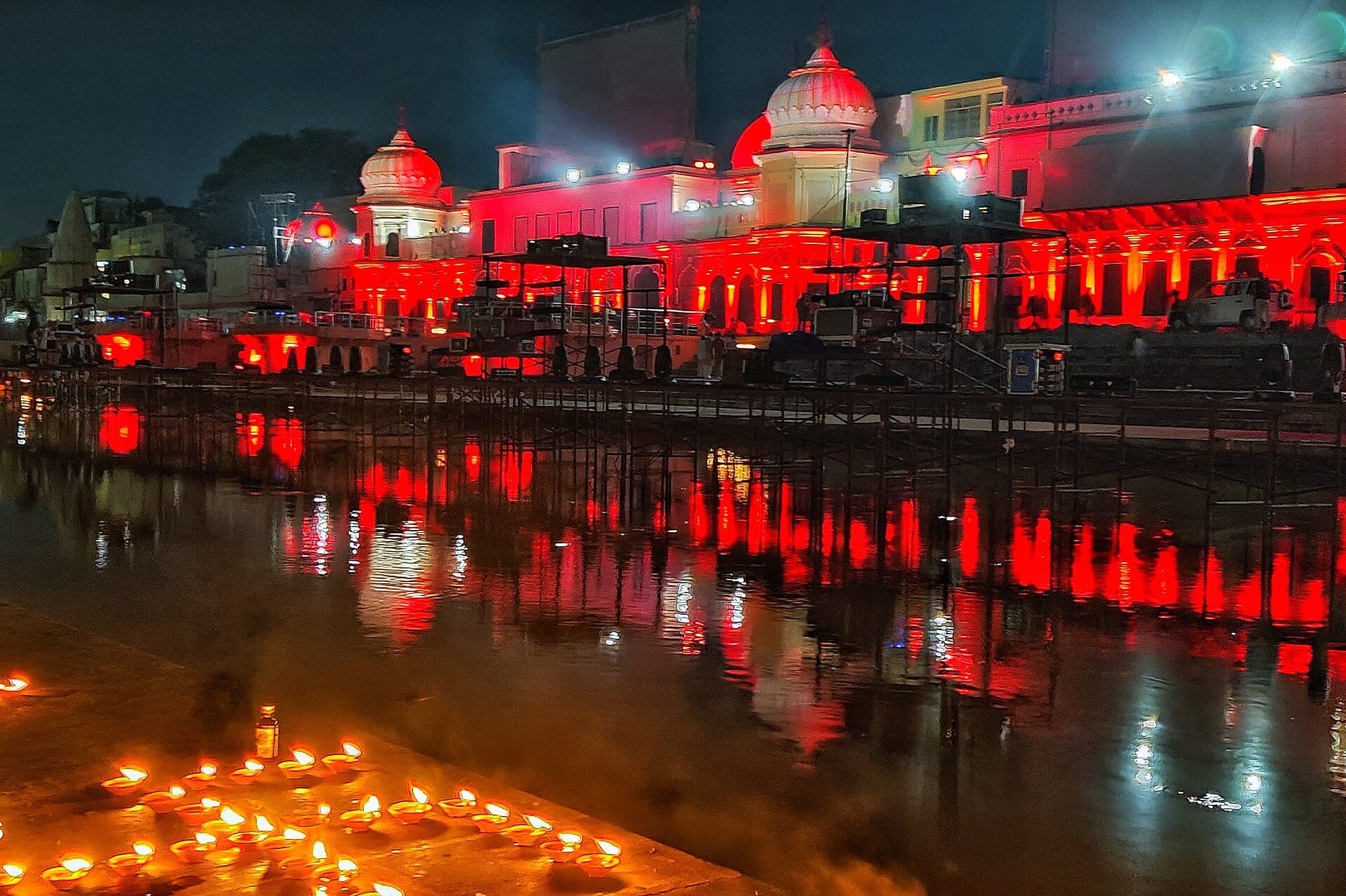
Diwali is not one evening but five days, from Dhanteras to Bhai Dooj. Each day has its own deity, its own story and its own rituals. Here is what happens on each day in 2026, when the muhurats fall, and where to see the festival at its brightest.
Diwali 2026 at a glance
- Friday, 6 November: Dhanteras. Puja muhurat 6:02 PM to 7:57 PM.
- Sunday, 8 November, dawn: Naraka Chaturdashi (Choti Diwali). Abhyang snan 5:41 AM to 6:38 AM.
- Sunday, 8 November, evening: Lakshmi Puja. Muhurat 5:54 PM to 7:50 PM.
- Tuesday, 10 November: Govardhan Puja and Annakut. Morning muhurat 6:40 AM to 8:50 AM.
- Wednesday, 11 November: Bhai Dooj. Tilak time 1:10 PM to 3:20 PM.
All times are for New Delhi, from Drik Panchang. Your city's times can differ by several minutes, and some regions keep a festival a day earlier or later. Your family priest or local temple has the final word.
Why the calendar looks unusual this year
Hindu festivals follow the tithi, the lunar day, rather than the date on the wall calendar. In 2026 Chaturdashi ends at 11:27 AM on 8 November and Amavasya, the new moon, begins straight after. So the dawn bath of Choti Diwali and the evening Lakshmi Puja fall on the same Sunday. Amavasya then lasts until 12:31 PM on Monday, so Pratipada, the lunar day of Govardhan Puja, is first present at sunrise on Tuesday. That leaves Monday, 9 November, between the two.

Day 1: Dhanteras
Dhanteras, or Dhantrayodashi, falls on the thirteenth lunar day of the waning moon, two days before the new moon. It honours Lord Dhanvantari, the physician of the gods, who is said to have risen from the churning of the ocean carrying a pot of amrit. It is also the day the home is made ready to welcome Lakshmi.
Families clean and decorate the house, draw rangoli at the doorway and buy something new in metal, such as a utensil, a coin, or a little gold or silver, as a sign of prosperity. After dark, many light a lamp outside the main door facing south for Yama, the lord of death. This is the Yama Deepam, a prayer that no untimely death enters the house.
What to buy on Dhanteras
- Gold or silver: a coin, often stamped with Lakshmi and Ganesha, is the most popular purchase and is placed in the Lakshmi Puja.
- Utensils in brass, copper or steel: a new vessel for the kitchen or the puja room.
- A new broom: many families buy one, as a sign of sweeping poverty out of the house.
- Diyas, idols and puja items: clay lamps, new Lakshmi and Ganesha idols, and whatever the Diwali puja needs.
The purchase is best made during the Dhanteras puja muhurat or on the Trayodashi tithi. In New Delhi that is 6:02 PM to 7:57 PM on 6 November 2026.
Day 2: Naraka Chaturdashi
Also called Choti Diwali or Roop Chaudas, this day remembers Lord Krishna's victory, with Satyabhama at his side, over the demon king Narakasura, who had imprisoned thousands of women in his fortress. Light over darkness, freedom over fear: the themes of Diwali begin here.
The day starts before sunrise with abhyang snan, a massage with sesame oil and ubtan followed by a bath, believed to wash away sin and ill health. In much of South India this dawn bath is Deepavali itself, and the day is celebrated as the main festival with new clothes, sweets and crackers. In the north, a few lamps are lit in the evening to welcome the big night.
Day 3: Lakshmi Puja
On Amavasya, the darkest night of the month, every lamp in the house is lit. Lakshmi, goddess of wealth and well-being, is believed to visit homes that are clean, bright and welcoming. She is worshipped together with Lord Ganesha, who removes obstacles, and often with Kubera, the treasurer of the gods.

The puja is done in Pradosh Kaal, the time after sunset, and ideally in a sthir lagna, a "fixed" ascendant such as Vrishabha, so that Lakshmi stays. That is why this year's New Delhi muhurat runs from 5:54 PM to 7:50 PM.
Lakshmi Puja samagri list
- Idols or pictures of Lakshmi and Ganesha, and a red or yellow cloth for the platform
- A kalash (copper or brass pot) with water, mango leaves and a coconut
- Roli or kumkum, haldi, akshat (unbroken rice), sandalwood paste and Ganga jal
- Flowers, marigold garlands and, if you can find one, a lotus, Lakshmi's own flower
- Diyas, ghee or oil, cotton wicks, incense and camphor
- Panchamrit (milk, curd, ghee, honey and sugar)
- Sweets and offerings: kheel and batasha, ladoo or kheer, fruit, betel leaves and supari
- Coins, the gold or silver bought on Dhanteras, and new account books if you keep them
Lakshmi Puja vidhi: step by step
A simple home puja follows this order:
- Clean the puja place and set up a raised platform covered with a red or yellow cloth.
- Place idols or pictures of Lakshmi and Ganesha, with a kalash of water topped with mango leaves and a coconut.
- Offer flowers, kumkum, rice, sweets, fruit and coins, and light a ghee lamp that can burn through the night.
- Recite Lakshmi and Ganesha mantras or the Shri Suktam, then perform aarti together as a family.
- Light diyas in every room, on the doorstep and along the windows.
Many traders open new account books on this day with Chopda Puja, asking Lakshmi's blessing on the year's business.
Kali Puja in Bengal
In West Bengal, Odisha and Assam, the same new-moon night belongs to Goddess Kali. Families and neighbourhoods worship her through the night, and in Kolkata the Kalighat and Dakshineswar temples stay crowded until dawn.

Day 4: Govardhan Puja and Annakut
Govardhan Puja remembers the day young Krishna lifted Govardhan hill on his little finger and held it up for seven days, sheltering the people and cattle of Braj from Indra's storms. Devotees shape a small Govardhan from cow dung or clay, worship it and walk around it.
Temples prepare Annakut, literally a "mountain of food": dozens of dishes are heaped before the deity and then shared as prasad. In Braj, pilgrims walk the Govardhan parikrama, about 21 km around the hill.

The same lunar day is Bali Pratipada in Maharashtra, which welcomes the return of the generous King Bali, and Bestu Varas, the new year, in Gujarat.
Day 5: Bhai Dooj
Sisters apply a tilak on their brothers' foreheads, perform aarti and pray for their long life, and brothers give gifts in return. The story goes that Yama visited his sister Yamuna on this day and blessed every brother who receives a tilak from his sister. It is also called Bhau Beej in Maharashtra, Bhai Phonta in Bengal and Yama Dwitiya.

The mythology of Diwali
Few festivals gather as many sacred stories as Diwali. Different regions put different stories first, but they all tell of light returning after darkness.
Lord Rama returns to Ayodhya
In the Ramayana, Lord Rama spends fourteen years in exile with Sita and Lakshmana, while his brother Bharata rules Ayodhya in his name with Rama's sandals on the throne. After Ravana carries Sita away to Lanka, Rama, with Hanuman and the army of the vanaras, crosses the sea and defeats Ravana. When he finally returns home on the new-moon night of Kartik, the people of Ayodhya light rows of lamps to guide him through the dark. That welcome is why lamps line every doorstep in North India on Diwali, and why Ayodhya's Deepotsav is the grandest of all.
Lord Krishna defeats Narakasura
Narakasura, the son of Bhudevi, the Earth, ruled from Pragjyotishpura in the east. Swollen with power, he stole the earrings of Aditi, mother of the gods, and imprisoned thousands of women. Lord Krishna rode against him with Satyabhama, herself seen as a form of Bhudevi, and Narakasura fell on the day before the new moon. Before he died he asked that the day be remembered with lights and joy. In South India and Goa, Deepavali is celebrated on this morning, with an oil bath before sunrise and effigies of Narakasura burned in some towns.
Lakshmi rises from the ocean of milk
When the devas and asuras churned the cosmic ocean of milk with Mount Mandara as the churning rod and the serpent Vasuki as the rope, many treasures rose from the waters. Dhanvantari appeared with the pot of amrit, which is remembered on Dhanteras. Goddess Lakshmi rose seated on a lotus and chose Lord Vishnu as her consort. Many traditions hold that she emerged on Kartik Amavasya, which is why she is welcomed into every clean, lamp-lit home on Diwali night.
King Bali and Lord Vamana
Mahabali, a generous asura king, grew so powerful that he ruled all three worlds. Lord Vishnu came to him as Vamana, a young brahmin, and asked for only as much land as he could cover in three steps. Bali agreed, and Vamana grew until two steps covered earth and heaven; for the third, Bali offered his own head and was pressed down into the underworld. Moved by his devotion, Vishnu allowed him to return to his people once a year. Maharashtra and parts of the south welcome him back on Bali Pratipada, the day after Diwali's new moon.
Goddess Kali, Lord Mahavira and Guru Hargobind
In Bengal, Odisha and Assam, the same dark night belongs to Kali, the fierce form of the Goddess who destroys evil and fear. For Jains, Diwali marks the nirvana of Lord Mahavira at Pawapuri in Bihar, and the lamps stand for the light of his knowledge. Sikhs observe Bandi Chhor Divas, remembering Guru Hargobind's release from Gwalior Fort, and the Golden Temple in Amritsar is lit up for the occasion.
Why Diwali matters
- Light over darkness. The lamp stands for knowledge driving out ignorance, echoing the Upanishadic prayer tamaso ma jyotir gamaya, "lead me from darkness to light".
- Prosperity in its full sense. Lakshmi is wealth, but also health, harmony and abundance. She is believed to come where there is cleanliness, order and generosity, which is why homes are cleaned and gifts shared.
- A new beginning. Traders open new account books, Gujarat begins its new year, and the season's harvest is in. It is a natural time to settle debts and start afresh.
- Family and community. Sweets are exchanged, elders are visited for blessings, and brothers and sisters meet again on Bhai Dooj.
Where to experience Diwali
- Ayodhya. The Deepotsav on the ghats of Ram ki Paidi, along the Saryu, has set Guinness World Records for the most lamps lit at once. Pair it with darshan at Shri Ram Janmabhoomi Mandir, and check UP Tourism for this year's Deepotsav date.
- Varanasi. Diwali lights the ghats and Kashi Vishwanath. Fifteen days later, on Kartik Purnima, the city celebrates Dev Deepawali, when the gods are said to come down to bathe in the Ganga.
- Kolkata. Kali Puja night at Kalighat and Dakshineswar.
- Mathura and Vrindavan. Annakut in the temples of Braj, such as Banke Bihari and Dwarkadhish, Mathura, and the parikrama of Govardhan hill.
- Kolhapur and Mumbai. The goddess's own temples, Mahalakshmi in Kolhapur and Mahalakshmi in Mumbai, draw devotees through the festival.
Celebrating with care
- Choose clay diyas and natural colours for rangoli. They are kinder to the air and support local potters.
- Keep lamps away from curtains and loose clothing, and keep a bucket of water or sand nearby.
- Firecracker rules differ by state and city, and many places allow only green crackers within set hours. Check local rules before you buy.
- Loud bursts frighten animals and unsettle the elderly. Keep pets indoors.
- Temples are busiest on Lakshmi Puja evening and Govardhan morning. Go early, carry little, and follow each temple's rules on phones and photography.
Visit a temple near you this Diwali
Diwali is celebrated at home, but darshan at a temple completes it. Many families visit a Lakshmi or Vishnu temple on the evening of Lakshmi Puja, offer Annakut at a Krishna temple on Govardhan Puja, and seek blessings for the new year. Even a small neighbourhood mandir glows on these nights.
- Find one nearby. Open MARG and look at Nearby Temples, or browse temples across India.
- Check in when you arrive. Your visit is verified at the temple and added to your Spiritual Passport.
- Collect the sacred card. Most temples on MARG have their own card, unlocked on your first verified visit. Visiting several temples over the five days of Diwali is a beautiful way to start a collection.
Diwali 2026: frequently asked questions
When is Diwali in 2026?
Diwali, the night of Lakshmi Puja, is on Sunday, 8 November 2026. The five-day festival runs from Dhanteras on Friday, 6 November to Bhai Dooj on Wednesday, 11 November.
What is the Lakshmi Puja muhurat on Diwali 2026?
In New Delhi the Lakshmi Puja muhurat is 5:54 PM to 7:50 PM on 8 November, within Pradosh Kaal (5:31 PM to 8:09 PM). Times in other cities differ by a few minutes.
Why are Choti Diwali and Diwali on the same day in 2026?
Chaturdashi tithi ends at 11:27 AM on 8 November and Amavasya begins right after. So the dawn bath of Naraka Chaturdashi and the evening Lakshmi Puja both fall on Sunday, 8 November.
Is Govardhan Puja on 9 or 10 November 2026?
Govardhan Puja is on Tuesday, 10 November 2026. Amavasya lasts until 12:31 PM on 9 November, so Pratipada is first present at sunrise on the 10th.
Which gods are worshipped on Diwali?
Goddess Lakshmi and Lord Ganesha are worshipped together on Lakshmi Puja, often with Kubera. In Bengal, Odisha and Assam the night is dedicated to Goddess Kali.
What should I buy on Dhanteras 2026?
Gold or silver coins, brass, copper or steel utensils, a new broom, and diyas and puja items are traditional. Buy them on Friday, 6 November, ideally in the evening muhurat (6:02 PM to 7:57 PM in New Delhi).
Why do we light diyas on Diwali?
Diyas recall the lamps the people of Ayodhya lit to welcome Lord Rama home, and they invite Lakshmi into a bright, clean home. They also stand for knowledge driving away ignorance.
When is Bhai Dooj in 2026?
Bhai Dooj is on Wednesday, 11 November 2026. In New Delhi the tilak time is 1:10 PM to 3:20 PM.
The MARG app
Visit a temple near you
Take darshan, then check in with the MARG app: the visit joins your Spiritual Passport and you collect that temple's Sacred Card.