Ashtavinayak Yatra: A Pilgrim's Guide to the Eight Ganeshas
Eight self-manifested Ganeshas around Pune: the story of each temple, the traditional order, the route and how to plan the Ashtavinayak yatra in two or three days.
Author: MARG TeamPublished: 4 min read
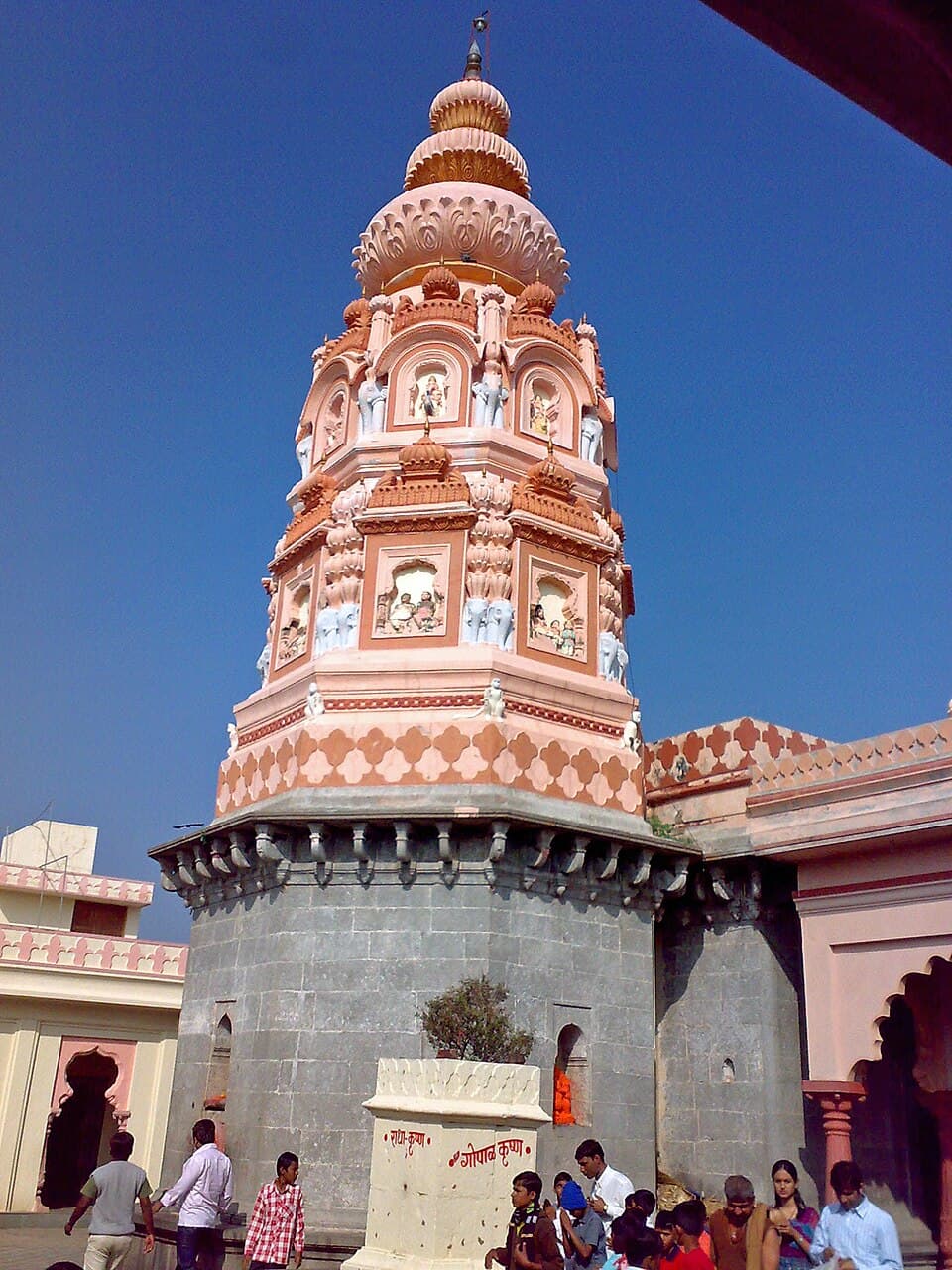
Around Pune, in the Sahyadri hills of Maharashtra, eight temples of Lord Ganesha are visited together as the Ashtavinayak yatra. Each idol is believed to be swayambhu, self-manifested, and each temple remembers a different story of how Ganesha removed an obstacle or blessed a devotee. The whole circuit can be done in two or three days, and for many families in Maharashtra it is a pilgrimage of a lifetime.
The traditional order
Tradition says the yatra should begin and end at Morgaon, and follow this order:
- Mayureshwar, Morgaon
- Siddhivinayak, Siddhatek
- Ballaleshwar, Pali
- Varadvinayak, Mahad
- Chintamani, Theur
- Girijatmaj, Lenyadri
- Vighneshwar, Ozar
- Mahaganapati, Ranjangaon
Then return to Morgaon to complete the circle. The full loop is roughly 650 to 700 km. Follow it on MARG: the Ashtavinayak Yatra.
The eight Ganeshas and their stories
Mayureshwar, Morgaon
The first and most important of the eight. Ganesha is said to have ridden a peacock (mayura) here to defeat the demon Sindhu. The temple, with its four gates and minaret-like towers, is built of black stone.
Siddhivinayak, Siddhatek
On the banks of the Bhima, this is the only Ashtavinayak whose trunk turns to the right. Vishnu is said to have worshipped Ganesha here before defeating the demons Madhu and Kaitabha, and gained siddhi, success.
Ballaleshwar, Pali
The only Ganesha named after a devotee. The boy Ballal was beaten and left bound to a tree by his own father for his devotion; Ganesha appeared, freed him and promised to stay there for ever.

Varadvinayak, Mahad
Ganesha the giver of boons. Devotees may enter the sanctum and pray close to the idol, and an oil lamp, the nandadeep, has burned here without a break since 1892.
Chintamani, Theur
Ganesha recovered the wish-fulfilling jewel, chintamani, for the sage Kapila from the greedy prince Guna. Theur is the closest of the eight to Pune.
Girijatmaj, Lenyadri
The only Ashtavinayak on a hill and in a cave: a climb of about 300 steps leads into a group of ancient Buddhist caves, where Parvati (Girija) is said to have prayed for a son.
Vighneshwar, Ozar
Ganesha defeated the demon Vighnasura, who disrupted the sages' worship. Asked to spare him, Ganesha agreed on one condition: Vighnasura would never trouble those who worship Ganesha. The temple has a golden dome.
Mahaganapati, Ranjangaon
Shiva worshipped Ganesha here before battling the demon Tripurasura. The idol is said to be the most powerful of the eight, Ganesha with many arms.
Planning the yatra
- Time: two days at a brisk pace, three for a relaxed yatra with time at each temple.
- Base: Pune is the natural starting point; Mumbai pilgrims often begin at Pali and Mahad.
- Best season: October to March. Ganesh Chaturthi, Maghi Ganesh Jayanti and Sankashti days are crowded but festive.
- Getting around: a private car or a pilgrimage tour from Pune is easiest; state transport buses also run.
- Prasad: modak and laddoos are offered at every temple.
When to go: Ganesha's festivals
The temples are at their most joyful during Ganesh Chaturthi, Maghi Ganesh Jayanti and on Sankashti Chaturthi, the fourth day after the full moon each month. Visit early in the morning to avoid the longest queues.
Collect all eight Ganeshas
Every Ashtavinayak temple has its own Sacred Card on MARG. Check in at all eight to complete the yatra in your Spiritual Passport.
- Find one nearby. Open MARG and look at Nearby Temples, or browse temples across India.
- Check in when you arrive. Your visit is verified at the temple and added to your Spiritual Passport.
- Collect the Sacred Card. Most temples on MARG have their own card, unlocked on your first verified visit.
Ashtavinayak Yatra: frequently asked questions
Which are the eight Ashtavinayak temples?
Morgaon, Siddhatek, Pali, Mahad, Theur, Lenyadri, Ozar and Ranjangaon, all in Maharashtra.
Which Ashtavinayak should I visit first?
Tradition says to begin and end at Mayureshwar in Morgaon.
How many days does the Ashtavinayak yatra take?
Two to three days from Pune by car.
Which Ashtavinayak has a right-turned trunk?
Siddhivinayak at Siddhatek, on the Bhima river.
Which Ashtavinayak is in a cave?
Girijatmaj at Lenyadri, about 300 steps up among ancient Buddhist caves.
MARG ऐप
Visit a temple near you
Take darshan, then check in with the MARG app: the visit joins your Spiritual Passport and you collect that temple's Sacred Card.