

History
King Narasimhadeva I of the Eastern Ganga dynasty (reigned 1238–1264) built the temple around 1250 CE. Tradition links it to his victories over the Bengal Sultanate. The legend says 1,200 artisans worked on it for 12 years under the chief architect, Bisu Maharana. When they could not set the crowning stone, his 12-year-old son Dharmapada fixed it, then gave his life to save the artisans from the king's anger.
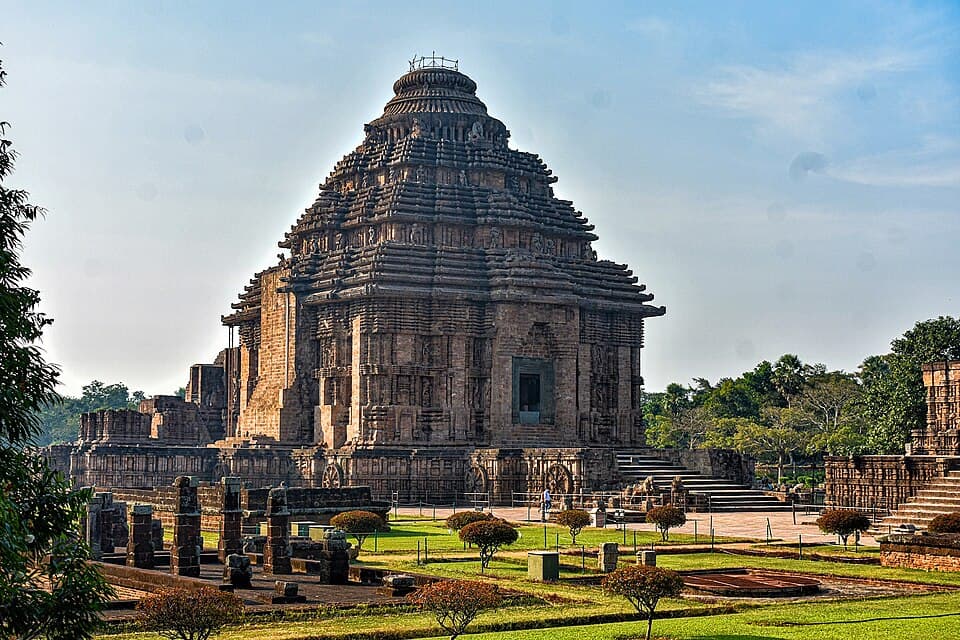
The main tower (deula) was about 70 m high. It collapsed between the 16th and 19th centuries, and nobody is sure why. Theories include weak foundations, lightning, and the removal of the crowning lodestone. Sailors used it as a landmark and called it the "Black Pagoda", to tell it apart from the whitewashed Jagannath temple at Puri, the "White Pagoda". Tradition holds that the presiding image of Surya was moved to Puri.
In 1903, to stop the surviving Jagamohana (assembly hall) from collapsing, the British government in Bengal filled it with sand and sealed it. The Archaeological Survey of India (ASI) has looked after the site since then and has been studying how to remove the sand safely. UNESCO listed the temple as a World Heritage Site in 1984. A Konark wheel is on the back of the ₹10 note.