Kumbh Mela Explained: The Four Cities, the Cycle and the Amrit Snan
The world's largest gathering of pilgrims: the legend of the pot of amrit, why Kumbh rotates between Prayagraj, Haridwar, Ujjain and Nashik, and how to experience it.
Author: MARG TeamPublished: 4 min read
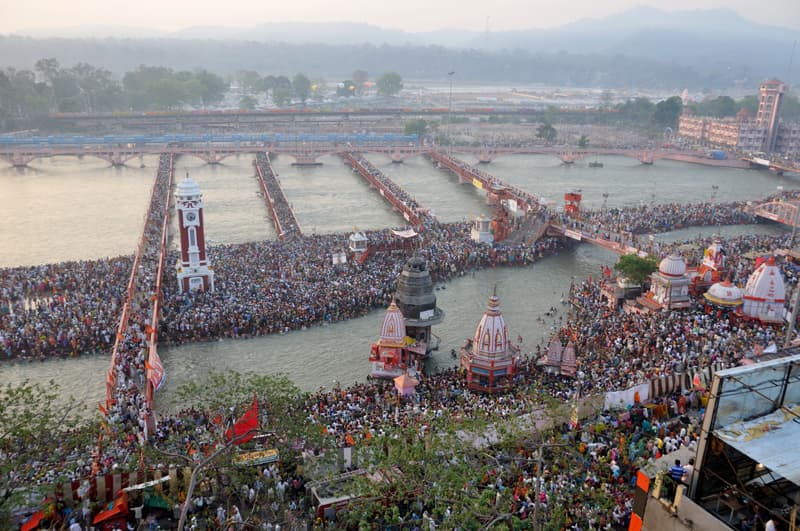
The Kumbh Mela is the largest peaceful gathering of people on earth. For weeks, crores of pilgrims, sadhus and seekers camp on the banks of a sacred river to bathe at the most auspicious moments. UNESCO lists it as an Intangible Cultural Heritage of Humanity. Here is what the Kumbh is, why it moves between four cities, and how to experience it.
The legend of the Kumbh
When the devas and asuras churned the ocean of milk for the nectar of immortality, Dhanvantari rose from the waters carrying a kumbh, a pot, of amrit. The gods and demons fought over it for twelve divine days, and as the pot was carried away, drops of amrit fell at four places on earth: Prayagraj, Haridwar, Ujjain and Nashik. Twelve divine days equal twelve human years, which is why each city hosts the Kumbh once every twelve years.
The four cities of the Kumbh
- Prayagraj: at the Triveni Sangam, where the Ganga, the Yamuna and the unseen Saraswati meet. The largest of all.
- Haridwar: on the Ganga, at Har ki Pauri, where the river leaves the mountains.
- Ujjain: on the Shipra, home of Mahakaleshwar Jyotirlinga. Held when Jupiter is in Leo, it is called the Simhastha.
- Nashik and Trimbakeshwar: on the Godavari, near Trimbakeshwar Jyotirlinga, also a Simhastha.
Which city hosts the Kumbh, and when, is decided by the positions of Jupiter, the Sun and the Moon.
Kumbh, Ardh Kumbh and Maha Kumbh
- Kumbh: every 12 years in each of the four cities.
- Ardh Kumbh: the "half" Kumbh, every 6 years at Prayagraj and Haridwar.
- Maha Kumbh: after twelve Kumbhs, once in 144 years, at Prayagraj. The last was held in early 2025.
- Magh Mela: every year at Prayagraj in the month of Magha, when pilgrims practise kalpavas, a month of austerity on the riverbank.

The Amrit Snan: the royal bath
The highlight of every Kumbh is the Amrit Snan, long called the Shahi Snan. On the most auspicious days, the akharas, ancient orders of sadhus, lead the bath in grand processions with elephants, horses, flags and drums. The Naga sadhus, ash-smeared and unclothed, go first. Only after them do the pilgrims enter the water. Bathing days usually include Makar Sankranti, Mauni Amavasya and Vasant Panchami at Prayagraj.
What to see at the Kumbh
- The akhara camps, where sadhus of many traditions live, teach and meet pilgrims
- Pravachans, kathas and kirtans in tents across the mela ground
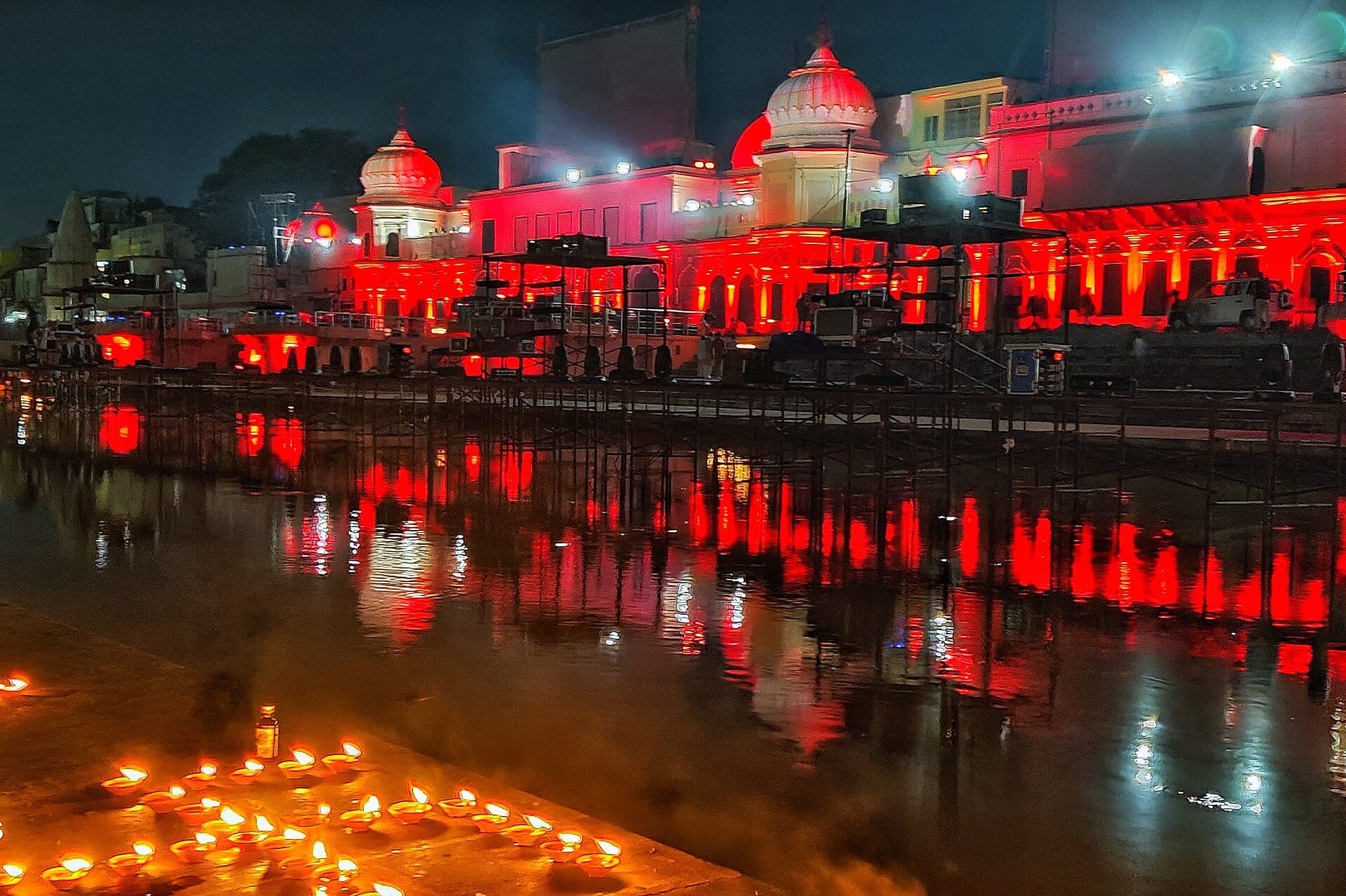
- The evening aarti on the river
- Langars and bhandaras feeding lakhs of people every day
The next Kumbh Melas
Nashik and Trimbakeshwar are due to host the Simhastha Kumbh in 2027, followed by Ujjain's Simhastha in 2028. Official bathing dates are announced by the state governments; check them before you plan.
Tips for pilgrims
- Book tents or rooms months ahead; prices rise sharply on bathing days.
- Avoid the main bathing days if you are travelling with children or elders; the days in between are calmer.
- Agree on a meeting point with your group, and carry ID and an emergency contact.
- Follow police and volunteer instructions, especially at ghats and on pontoon bridges.
Visit the temples of the Kumbh cities
Mahakaleshwar in Ujjain and Trimbakeshwar near Nashik are Jyotirlingas with their own Sacred Cards on MARG, and part of the 12 Jyotirlinga Yatra.
- Find one nearby. Open MARG and look at Nearby Temples, or browse temples across India.
- Check in when you arrive. Your visit is verified at the temple and added to your Spiritual Passport.
- Collect the Sacred Card. Most temples on MARG have their own card, unlocked on your first verified visit.
Follow them on MARG's 12 Jyotirlinga Yatra.
Kumbh Mela: frequently asked questions
What is the Kumbh Mela?
A great Hindu pilgrimage held at four river cities, where crores of people bathe on auspicious days to wash away their sins.
Why is the Kumbh Mela held every 12 years?
The gods and demons fought over the pot of amrit for twelve divine days, which equal twelve human years.
Where will the next Kumbh Mela be held?
Nashik and Trimbakeshwar are due to host the Simhastha Kumbh in 2027, and Ujjain in 2028.
What is the difference between Kumbh, Ardh Kumbh and Maha Kumbh?
The Kumbh comes every 12 years in each city, the Ardh Kumbh every 6 years at Prayagraj and Haridwar, and the Maha Kumbh once in 144 years at Prayagraj.
What is the Amrit Snan?
The royal bath on the most auspicious days, led by the akharas of sadhus, formerly called the Shahi Snan.
MARG ऐप
Visit a temple near you
Take darshan, then check in with the MARG app: the visit joins your Spiritual Passport and you collect that temple's Sacred Card.